












There’s no question that Nashville has gone through a huge transformation over the past 20 years: surges in population, investment, and tourism have caused explosive growth in our city. But while growth may be an inevitable function of a private housing market, the way it displaces long-time locals makes it more than just an economic trend. Rather, it’s a crisis of community stability that should have a prioritized humanitarian response.
The following analysis explores the data on gentrification in Nashville, the pros and cons, and directions for a future where local families are protected.
What is Gentrification?
Gentrification is the forced displacement of residents from their homes due to rising rent prices and property values, caused by a sudden influx of high-income residents and negative housing supply shocks.
When high-income prospective residents enter the housing market in low-income neighborhoods, developers and investors will follow the money trail: recognizing the new demand for higher-end homes, developers will buy out undervalued properties in these low-income neighborhoods, converting them into high-rent housing options or luxury commercial spaces. When high-income migration is combined with a concurrent decrease in availability of housing, property prices and rent spike hard, leading to the forced displacement of low-income residents. As low income residents are displaced, investors will subsequently buy out locally owned, legacy shops — replacing them with luxury retail.
Why Nashville Is a Gentrification Hotbed
A potent combination of rapid population growth and tourism makes Nashville the perfect breeding ground for gentrification.
From 2010-2020, the city added roughly 80-100 new residents daily, creating intense housing demand pressure that forces higher-income residents to search for housing options in lower-income neighborhoods, thus kickstarting the cycle of gentrification. On top of that, a wave of corporate migrations to Nashville, including Amazon and Oracle, has introduced thousands of high-earning workers to Nashville, further stoking gentrification.
Our touted tourism industry is also a gentrification accomplice. Luxury hotels and short term rental housing for tourists (like VRBO and AirBnB) decrease the overall long-term housing supply, thus driving up property and rent prices across low-income neighborhoods. Nashville’s rapid inbound migration and tourism industry strangles the housing market, creating the perfect storm for gentrification: high-end home demand and a lack of adequate housing supply.
Gentrification By the Numbers in Nashville
The statistics don’t lie: Nashville’s gentrification is surging. Far outpacing wage growth, Nashville rent has grown by 64% since 2011. Evictions are peaking. Though exact numbers differ, median home prices have soared to roughly $450,000, a striking 135% increase from the previous decade. In East Nashville, Germantown, and the Nations, property prices have spiked significantly. Beyond just spikes in property value, developer and investor buyouts are swallowing the housing market, a surefire indicator of incoming gentrification. In historically Black North Nashville, 40% of home sales went to developers and luxury investors. In fact, only three years ago, 30% of all homes sold in Nashville in recent years went directly to investors.
These numbers all point to one conclusion: waves of native Nashvillians are being displaced from their homes. So the question becomes: Where are they going? Most victims of gentrification relocate to one of two places. Some permanently move into weekly rental motels, while others opt to live with friends or family, a special category of housing called “doubled-up.” Some, however, don’t have an alternative housing option and become homeless.
In more fortunate cases, host families will house victims of gentrification free of charge, but in most scenarios, doubled-up families are forced to pay for an overcrowded, inadequate living space. Families forced into weekly rental motels pay anywhere from $1,400 to $2,000 a month, which is more expensive than the average mortgage on a mid-size house.
Cons of Gentrification
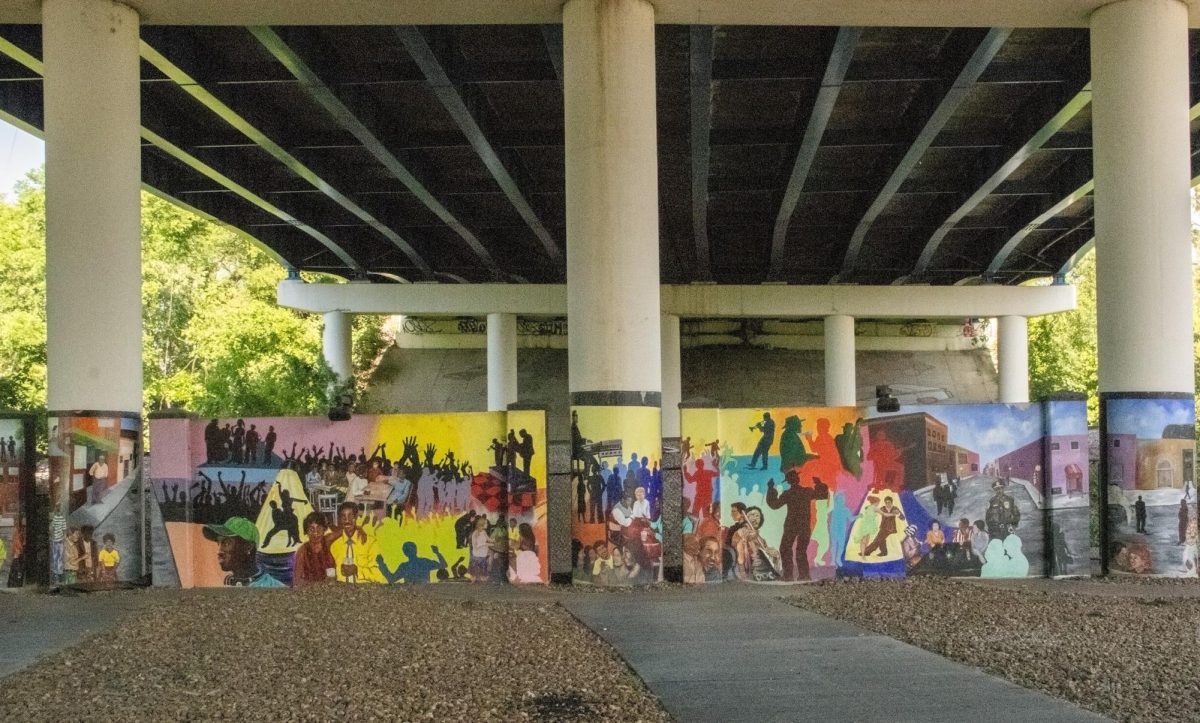
One of the primary drawbacks of gentrification in Nashville is the loss of historically and culturally significant neighborhoods. This is most visible on the historic Jefferson Street. As property values are rising in the Jefferson Street district, natives are forcefully vacated, taking their stories with them. Luxury developers are replacing historical buildings with high rent homes or hotels. Home to Fisk University, Meharry Medical College, and Tennessee State University, Jefferson Street has been the epicenter of Nashville’s African-American community for decades. The area was the site of major developments during the Civil Rights Movement, including student-led sit-ins and organized, peaceful protests. In the words of Martin Luther King, “I came to Nashville not to bring inspiration, but to gain inspiration from the great movement that has taken place in this community.” That inspiration, in large part, radiated from Jefferson Street and its inhabitants.
The first strike of gentrification came in 1968, with the construction of Interstate 40 directly over the Jefferson Street Corridor. The construction process itself displaced hundreds of Jefferson natives, and also led to the closure of many Black-owned businesses. And, sadly, the historical markers of Jefferson Street’s role in the Civil Rights Movement began to vanish as well. I-40 was only the first stroke of gentrification in the area; since then, property values have continued to rise, placing pressure on native residents.
The highly unstable living conditions associated with gentrification present a multitude of economic and ethical concerns.
Gentrification exacts a high price on MNPS students. To fully understand the impact of housing instability on Metro Nashville students, I interviewed the director of special population services for MNPS, Mrs. Catherine Knowles. In the 2024-2025 school year, roughly 4,500 MNPS students were recorded as experiencing housing instability. According to Knowles, “it’s difficult for students to focus on school” … “to prioritize school when they’re worried about where they are going to lay their head at night.”
Unstable housing, says Knowles, correlates with high absenteeism. Gentrification often displaces students to bordering counties, like Montgomery or Madison, making school commutes far more difficult and unpredictable. In fact, students in unstable housing are twice as likely to miss 10+ days of school. Naturally, higher absenteeism leads to poor academic performance. Homeless or doubled-up students score 30-40% lower on standardized tests. Likewise, motel-housed students often exhibit lower academic performance due to the added anxiety and inconvenience of their living conditions.
Upsides of Gentrification
There are two sides to the story: Gentrification does have its benefits for Nashville. The construction of luxury hotels and residential areas contributes to billions to Nashville GDP; though the displaced don’t get to reap these benefits. Rising property values increase tax revenue for Metro, which can be invested into improving Nashville’s infrastructure. And studies conducted by Stanford university suggest that gentrification and rent deregulation reduces crime by revamping low-income neighborhoods, which tend to exhibit higher crime rates. Gentrification introduces a higher standard of living for new entrants, and clean, new infrastructure further increases tourism appeal, increasing Nashville’s net GDP.
Ways to Prevent Gentrification
One potential solution starts way before prospective homeowners enter the housing market. In fact, it starts in school, in the form of financial literacy.
Statistically speaking, households with higher financial literacy rates are more likely to secure better mortgage loans on which they will not default in the long-term. This increases local homeownership, meaning there are fewer open properties available to be snatched by luxury developers.
The hope is that financially literate homeowners have the financial judgment to avoid predatory and extortionist financial practices, including payday loans and subprime mortgages — mortgages lent to weak credit holders at adjustable, high interest rates that increase the likelihood of a default. In fact, subprime mortgages, in large part, fomented the 2008 housing bubble burst. Additionally, higher financial literacy rates build better budgeting skills over time. This would make Nashvillians more equipped to consistently pay rent, thus reducing overall foreclosure risk and evictions, which are a catalyst for gentrification, as high end developers swoop in to snag these vacant lots.
The Verdict
Nashville’s tourism industry and rapid growth put a chokehold on the city’s housing market, culminating in extreme demand for luxury homes and a shortage of housing supply. This supply-demand dynamic spikes property values in low-income neighborhoods, pricing out local residents and ushering in luxury developments.
Under the mechanisms of capitalism, gentrification in a private housing market is an inevitability, so the question is not thwarting gentrification entirely. Nashville’s focus should be providing humane alternative housing options for displaced residents, whilst also ensuring MNPS students can continue their education in a safe, consistent environment. Although rising property values may be intrinsic to a city’s growth, in no world should student futures be sacrificed.