

























On Dec. 2, the contentious race for Tennessee’s 7th Congressional District was decided when Republican Matt Van Epps defeated Democrat Aftyn Behn. But Van Epps’ victory was narrow — he beat Behn by only 9 percentage points, a tight margin considering the 22-percentage point sweep Trump enjoyed in the region in 2024. What was supposed to be a straightforward race drew national attention. Surprised Democrats and Republicans alike, watched as Behn managed to claw a significant blue minority out of the notoriously red district.
Behn’s victory bodes well for Democrats, who are gearing up for nationwide midterm elections in late 2026. Democratic strategists are now looking to Behn’s campaign for clues as to how to mobilize blue voters in Republican-led states. Behn announced in January that she does not plan to run in the 2026 midterms, but key Democrats, including Vincent Dixie, are announcing plans to run against Van Epps and will likely look to Behn’s campaign for clues as to how to mobilize liberal voters.
“We can point to [Behn’s loss] and say: See, people are interested in electing Tennessee Democrats to office,” said Matt Ferry, a volunteer for the Behn campaign. So what were the ingredients of Behn’s campaign that made it so successful — and what does this mean for the 2026 midterms?
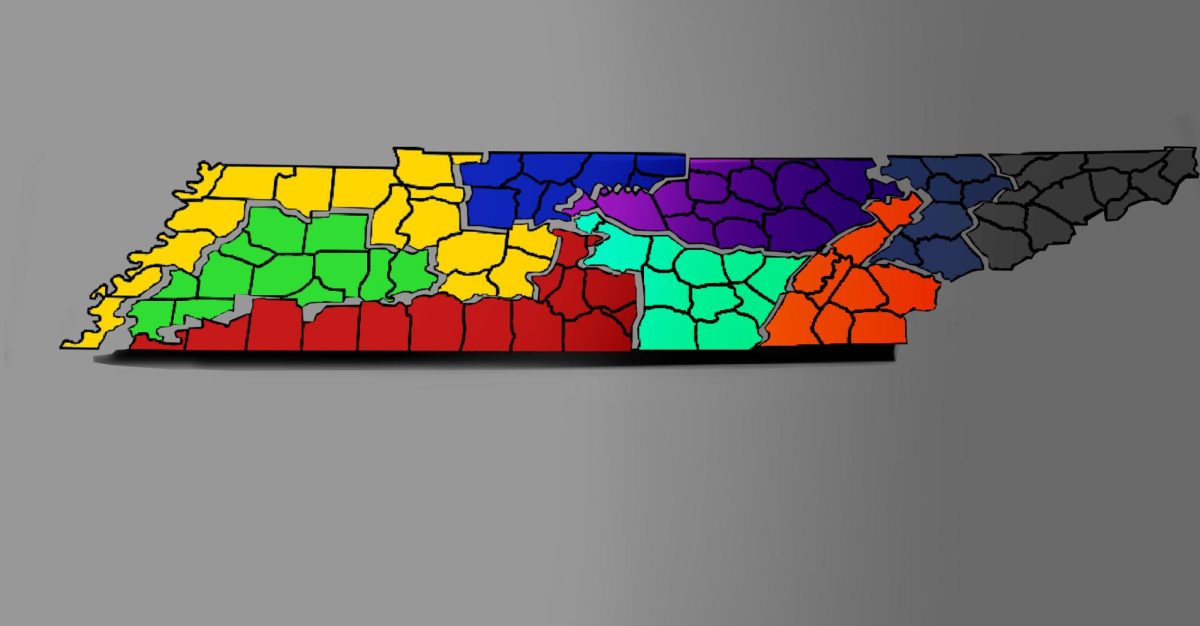
The fight for Congressional power between Van Epps and Behn came down to a practice known as gerrymandering. While Nashville had been represented for 32 years by Democrat Jim Cooper, in 2022 the district was split by Republican lawmakers into three districts: the 5th, 6th and 7th Congressional Districts.
Each of the new Nashville districts encompasses a large rural Republican majority — meaning that Nashville is now represented by three majority-Republican districts, rather than one majority-Democrat district. To split up blue voters in Nashville, Republican lawmakers employed a gerrymandering technique known as “cracking” — splitting a concentrated base of voters into several different districts, so that they become the minority. Now the Democrats, led by Behn, are trying to recapture Nashville as Democratic territory.
Last June, Mark Green, the Republican Congressman who had represented Tennessee’s 7th District, resigned to work in the private sector after serving six years in Congress. A special election had to be called as a result to decide a new representative for the 7th District. The election was a long-shot for Democrats, but it gave them a shot at one last victory after their poor performance in 2024. After a primary held in October, Van Epps and Behn emerged as the candidates for the race.
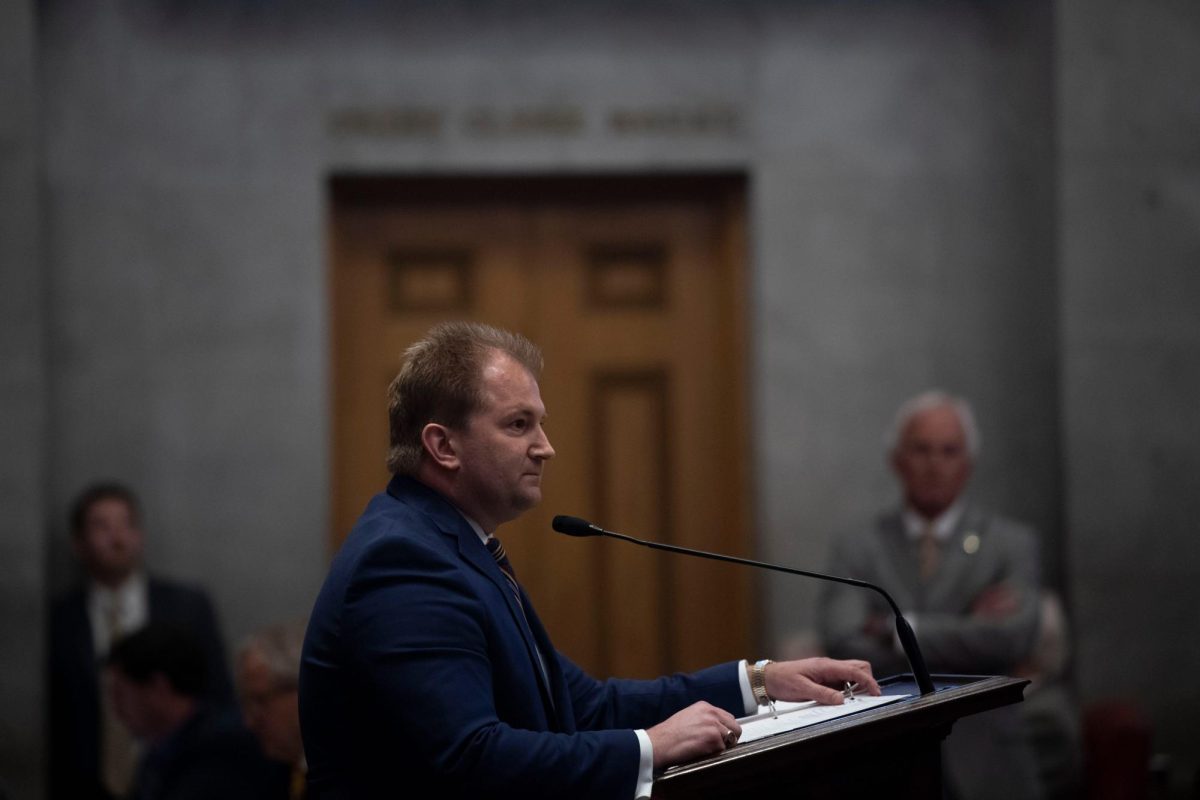
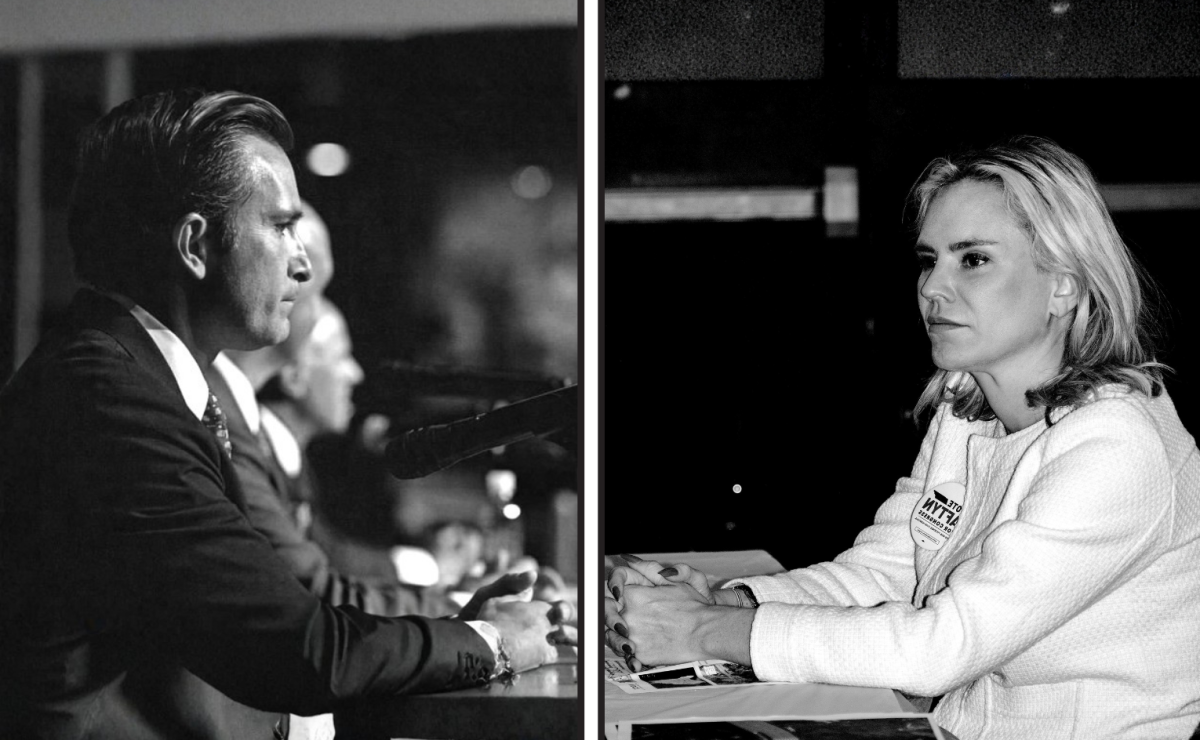
On one end of the electoral boxing ring was Matt Van Epps — a Republican, a veteran, and a loyal follower of President Trump, who endorsed him in October. On his campaign website, Van Epps’ campaign announced that they were “fully committed to advancing President Trump’s America First agenda.” A MAGA golden boy, Van Epps was unapologetically pro-gun, pro-life and pro-Israel.
On the other end of the ring was Behn, a self-described “pissed-off social worker” who had a background in community organizing and served in the state House of Representatives. Behn centered her campaign on the working class and promised to eliminate the grocery tax and rebuild rural economies if elected. As a 36-year-old Tennessee native, Behn seemed like a fresh face for Democrats. She earned a reputation as a bit of a loose cannon, drawing controversy for stating on a podcast that she “hate[d]” Nashville’s bachelorette and tourist culture.
Predictably, Behn lost. But the headway she made in the 7th District gives Democrats hope. “I think [Behn’s success] is gonna translate into the other precincts, other districts in Nashville,” said Aaron Andersen, the Davidson County Democratic Precinct Captain. Others echoed his sentiment. “What I have learned… is that voters, when given a compelling candidate, will turn out,” said Nathan Hidon, the Vice Chair of the Tennessee Democratic Party.
Behn’s unapologetically pro-working class stances attracted young voters to her campaign. “I think young people are tired of elected officials who falter their values,” said Julian Nguyen, a young voter. “Aftyn has shown that by standing up for the working class, we can include everyone in our vision for the future.”
“ I think about how this campaign has pumped up everyone from all ages, but especially the youth,” said Jacob Francy, the Chair of the Tennessee High School Democrats. “Fourty percent of this district is 30 and under. So Aftyn has swayed a lot of different young people and it showed them that anything is possible.” Another young volunteer agreed: “I think she’s inspired a lot of young people to be more involved in politics, and I think that itself is a win.”
Republicans, too, are gearing up for more contentious fights in Tennessee in years to come. Chip Saltsman, a Republican political strategist, admitted that “in Tennessee, it’s been a long time since we thought about beating Democrats.” When asked about the race’s slim margin, Van Epps declared that “A win is a win.” On Truth Social, Trump congratulated Van Epps on “another great night for the Republican Party.”
It remains to be seen whether Tennessee’s Democrats will rise to the occasion during the midterms, or whether Behn’s foothold in a majority-red district will spell trouble for Republicans in other red districts. From here, it’s in the voters’ hands.