



















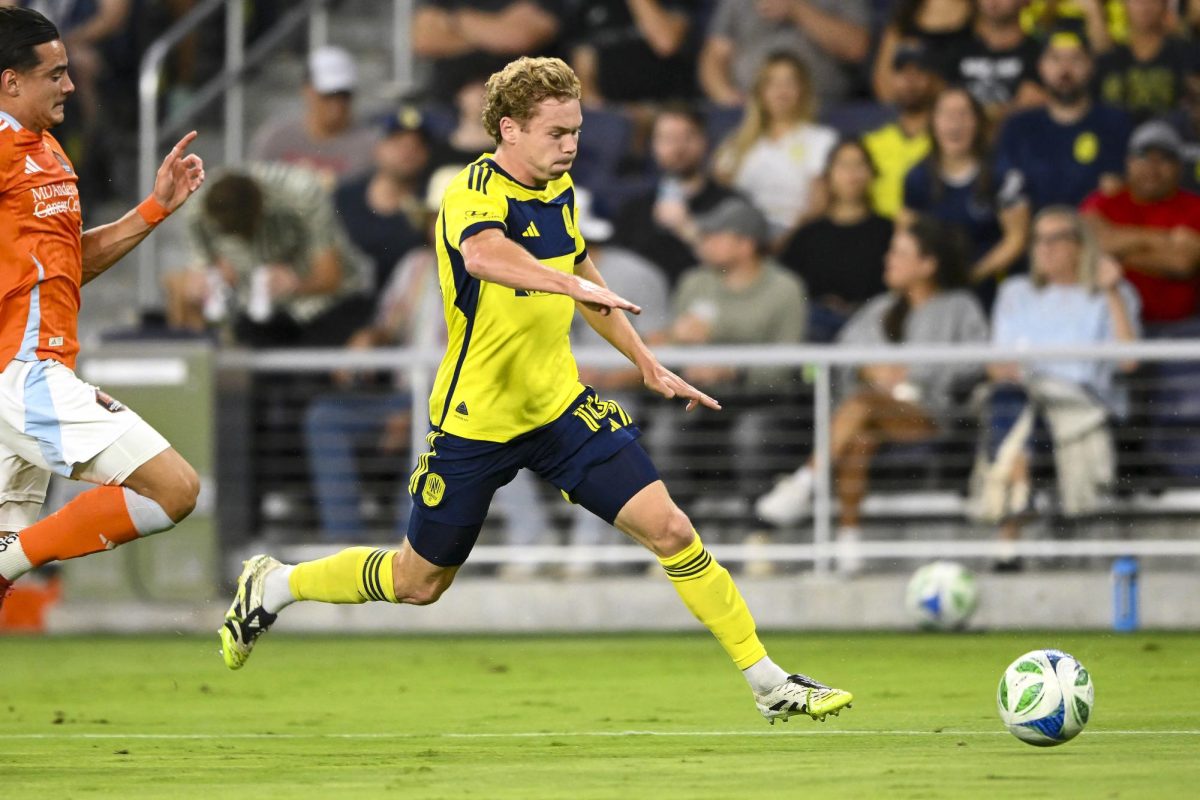

With the United States set to co-host the 2026 World Cup along with Canada and Mexico, it has become a common topic of conversation in the United States’ soccer community to consider what the U.S. Men’s National Team (USMNT) can do best to prepare for the summer of 2026.
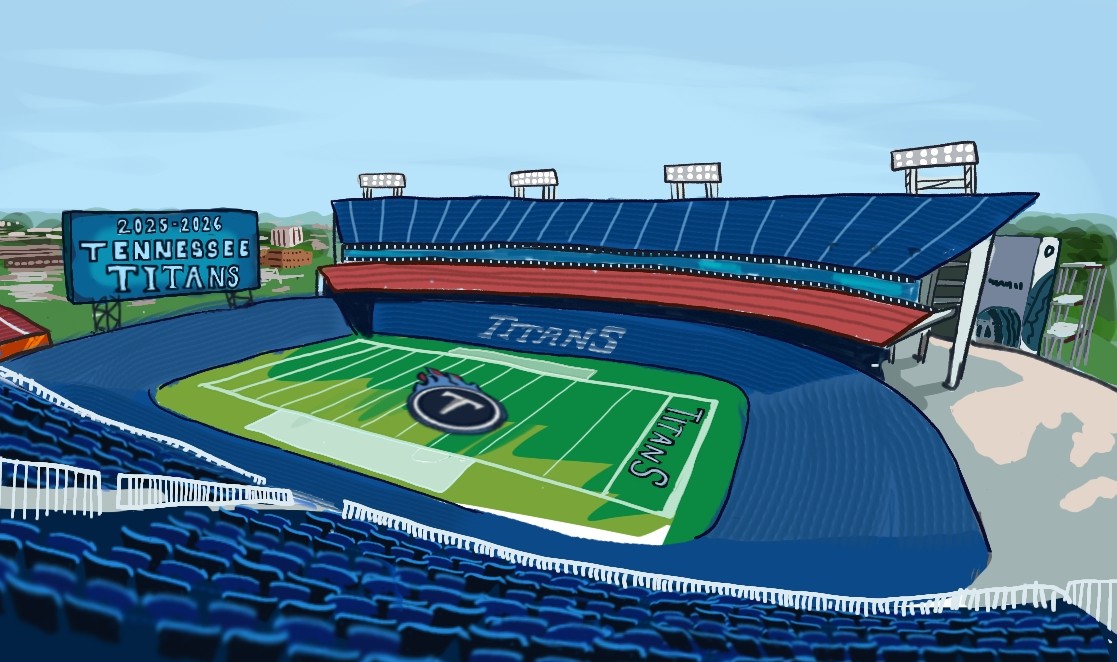
While Nashville will not be hosting any of the matches in this tournament, Nashville Soccer Club’s home, Geodis Park, did see a fantastic turnout for the 2025 Club World Cup last summer, which could make it a prime candidate for future tournaments.
Although USMNT fans had high hopes following the hiring of the head coach Mauricio Pochettino in August of 2024, the USMNT has failed to perform under new leadership. They have a record of 16-6-12 in 2025, which is simply not good enough for a team with any desire to make it far in the 2026 World Cup.
As the popularity of soccer has been increasing in the U.S., more and more people are wondering why, despite our dominance in other sports such as basketball, baseball, track, and swimming, we seem so far behind in the most popular sport in the world.
It’s no secret that the growth of soccer in the U.S. has been extremely rapid. A USMNT game vs Bolivia in the 2024 Copa America received a whopping 3.165 million viewers, a 108% increase compared to a similar match in 2016.
The USMNT put up a great fight in the 2022 World Cup, including an unexpected 0-0 draw against the England National Football Team, a long-time powerhouse in national team soccer. They fell short in a 3-1 loss to the Netherlands in the round of 16, but millions of Americans found great pride and entertainment in watching their country play such a high level of soccer.
The increase in the popularity of national team soccer was closely followed by a rise in the popularity of domestic leagues such as the Major League Soccer (MLS). Viewership and attendance have skyrocketed with the arrival of legends of the sport, such as Lionel Messi of Argentina, Luiz Suarez of Uruguay, and Heung-Min Son of South Korea. Regular season attendance increased by more than 14% from 2022. By 2024, U.S. attendance ranked behind only the Premier League of England and the Bundesliga of Germany.
Despite the increase in viewership, in 2010, around 11% of all U.S. children ages 6-12 played soccer, which decreased to 7.4% in 2021. Without kids playing the game, the U.S. won’t have adults playing it in the future.
If you look at the biggest and most legendary national soccer teams, there are some common themes that lead each of them to success. Countries like Brazil, Germany, Argentina, France, Spain, and the Netherlands all have fantastic youth development programs.
For those unfamiliar with how youth soccer typically works, it essentially operates as a separate league for younger players. A club can sign players whom they think have a bright future and try to give them the best resources possible to succeed. The club typically sells those players once they have developed enough to be able to play for a bigger club, or else the player will be moved to the club’s first team.
For example, 18-year-old Lamine Yamal of FC Barcelona has been a member of their world-renowned academy, La Masia, since he was scouted at the age of six. He made his first-team debut in August of 2023, and now he is valued at roughly 270 million USD. A player’s market value is the estimated fee a buying club would pay to a selling club for a player. This number is influenced by skill, age, and the amount of time left on the player’s contract.
This shows how having a strong academy can have a massive payoff. Barcelona is not the only club benefiting from this, as Yamal has also become one of the rising stars of the Spanish national team. During the 2024 Euros, Yamal scored one goal and assisted four in seven matches.
Yamal is the type of talent you come across once in a lifetime. Still, just one phenomenal talent is all it takes to create a legendary generation as long as some above-average players are there to complement them, like Lionel Messi and Argentina. Don’t get me wrong, Messi has been surrounded by some phenomenal players like Sergio Agüero, Lautaro Martínez, and Paulo Dybala, but I think it would be disingenuous to say that without Messi, the Argentinian National Team would have seen even close to the same amount of success. Messi, who plans to retire from the national team after the World Cup, has built an impressive trophy cabinet for Argentina, including two Copa Américas and one World Cup.
In America, the youth soccer system operates as a pyramid. At the bottom, local recreational leagues can cost parents around $100 per child per season. At the top, MLS Next can cost parents upwards of $2,000 per child, plus travel fees, including flights, gas, and hotels. This fee depends on the club and whether the club is willing to cover part of the cost.
While the cost of clubs is gradually decreasing and club soccer has become more and more accessible, the conflation of the sport with high expenses is something that will take years to go away.
In other parts of the world, youth clubs can be funded with taxpayer dollars and they often have access to free equipment and facilities, such as gyms and indoor fields. This is a stark contrast from the state of soccer in Nashville, where I have arrived multiple times at the ‘Public’ soccer field in front of Geodis Park just to find the goals locked by a chain front to front. It will never make sense to me why the people who benefit most from emerging soccer talent in Nashville, Nashville SC, are so determined to discourage young players from honing their skills right outside where they hope to play in the future.
It would also be ignorant not to mention how costs can directly marginalize different racial groups from succeeding in the sport. According to the U.S. Census Bureau, in 2021, families with a Black head of household had 10 times less wealth than those with a White head of household. Not to mention how inaccessible fields and practice facilities are in urban areas, where Black Americans are overrepresented.
The lack of attention to different socioeconomic classes in soccer stems from the fact that soccer has not found its way into the mainstream culture of the United States as it has in other countries in Europe and South America. Although some might argue that soccer needs to be a part of the culture for the system to change, I would argue the opposite: Once the system changes and soccer becomes available to all, then soccer will become a part of the culture.