


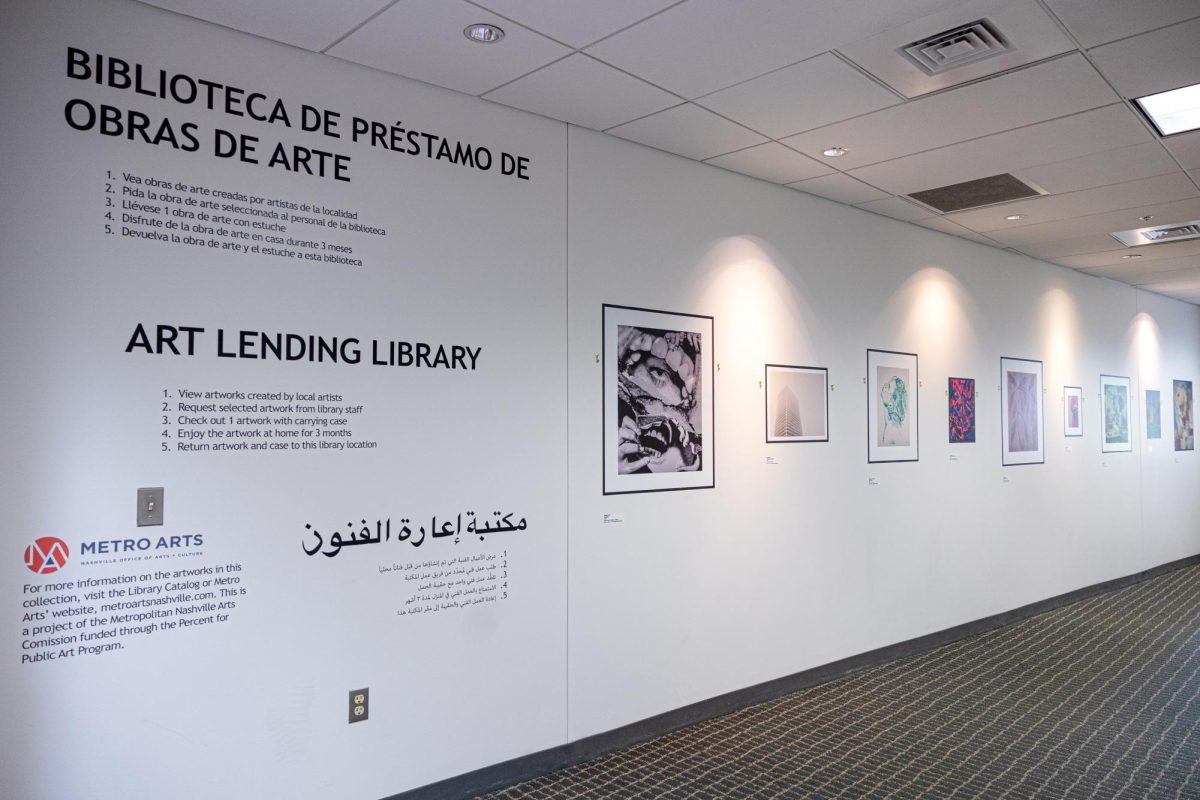
On a Thursday morning this summer, I drove to the library to get a piece of art for my bedroom. Since I started college, the art pieces that usually decorate my walls have been sitting in a storage vault in New York, leaving my Nashville bedroom bare. I love art, and I wanted something interesting — something quality — that would enliven my room for the span of the summer. So I turned to Nashville’s Art Lending Library.
The Lending Library, a unique aspect of Nashville’s public library system that launched in 2020, enables city residents to check out pieces of art as they would check out books. Library card holders can borrow paintings, collages, and photographs (along with hooks for installation) for three months, before returning the pieces to the library.
When we think of public art, we usually think of things admired from a distance: a sculpture passed on the street, a weird installation noticed briefly at a busy intersection. As an enjoyer of art –– and now a public arts journalist –– I have been thinking a lot recently about how a city like Nashville can facilitate our interactions with art. The Lending Library is a project that’s forging a new kind of connection between public pieces and the people who view them by enabling residents to borrow public art for display at home. Because of it, public art can become a regular, intimate staple of residents’ lives.
At seven different library branches in Nashville — Madison, Southeast, Green Hills, Donelson, East, Hermitage, and Old Hickory — formerly blank walls are decorated with public art. The artwork is created by local artists and purchased by the library.
Nashville’s art library model is artist-friendly — uniquely so. While other lending libraries, such as Brentwood’s, choose their art from select local art shows, limiting the pool of potential artists, Nashville commissioners wanted to be more democratic in their selection process. So in 2020, they made a county-wide application for artists available. Submissions were carefully selected by a panel of Metro officials and community members –– people “who had an interest in local art and curation… and really saw the benefits of such a program,” said Anne-Leslie Owens, Nashville’s Public Arts Collections Manager and a key contributor to the project. The most suitable pieces were then purchased by the library.
When the Covid-19 pandemic hit, the lending library became a means to bolster local artists financially. “We saw this as an opportunity, and something that was really needed,” said Owens. “We could purchase artwork from artists, many of whom were really suffering because of Covid.”
When Andy King, a Nashville artist and art teacher, applied to have his art purchased by the library, he saw it as an opportunity. “The hope is that [the art] gets accepted –– [and] not solely because of altruistic purposes,” said King, whose painting Division is now available for check-out in the East library. “I mean, it is an amazing program. But 800 bucks can buy a lot of paint for me. One sale can fund a ton of artwork.”
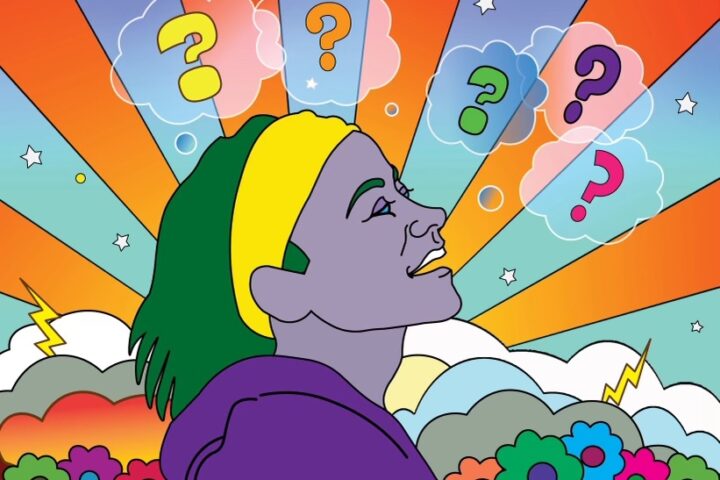
King created Division as a meditation on a person’s internal self. The painting is a portrait of a young person whose face devolves into swirls of vibrant color. “The painting was the start of this idea… that we live in two different worlds –– that we have an outer identity that is presented, and perceived by everybody else, and then we have an internal landscape that can be very different,” said King. The painting is one of several in his portfolio that explores this idea of the inner self. To an interested borrower of the painting, Division could serve as an introduction to this broader collection, or to King’s work writ large. “We are able to introduce people to new artists they never knew about,” said Owens. “[People] are exploring those artists and their work.”
At its core, the Lending Library is about democratizing access to art. “[It] provides access to people who may not… have the means to afford an original artwork,” said King. “It really expands who can enjoy original art.”
Anyone who hangs art on their walls knows that there is a depth, and an intimacy, to enjoying art regularly at home. When thinking about the program, Owens thinks about the small joys art can bring to a person’s life. “You can look at it at different times of day and night. And over time,” she said. “This is a chance to personally experience art.”
When I went to the Green Hills Library this summer in the hopes of checking out a piece of art for myself, I found that every piece of art on the wall had been checked out. Nashvillians, it seems, have taken the library’s advantages to heart. They are excited about public art –– and now they are experiencing it in their homes.