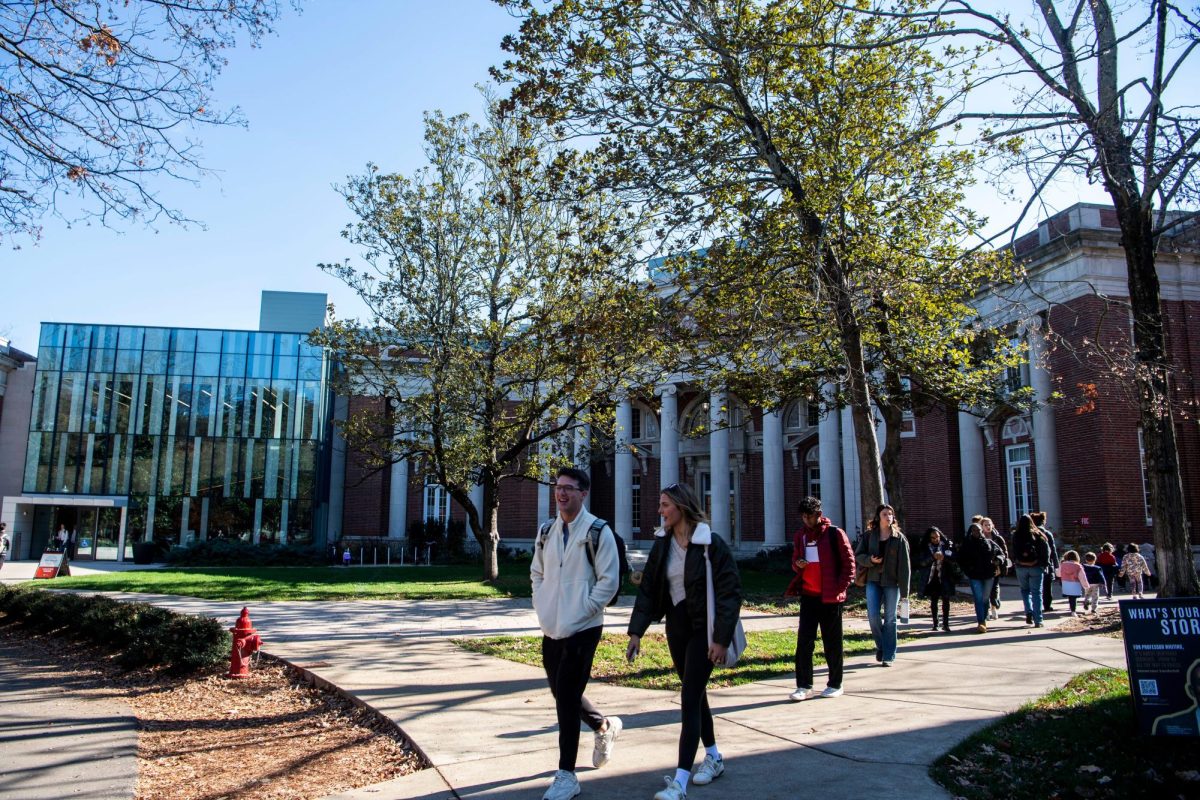















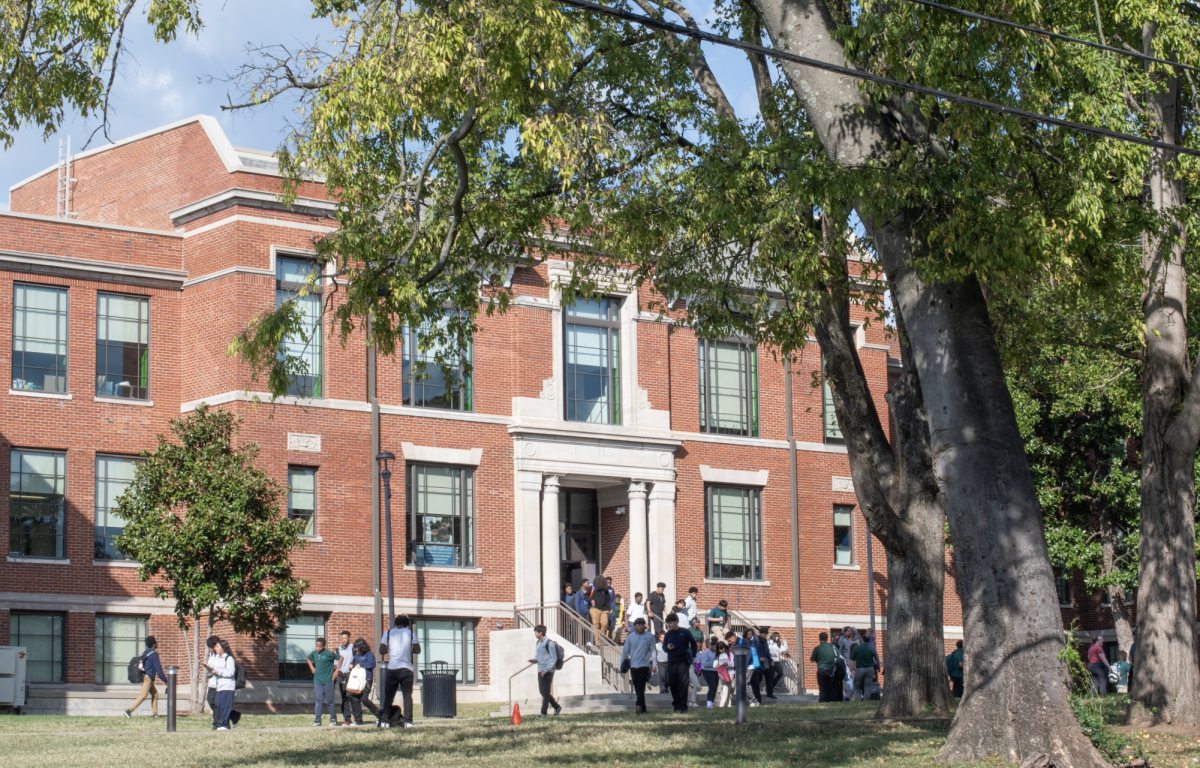
On a humid fall afternoon in East Nashville, students in crisp khaki uniforms spill out of the Knowledge is Power Program (KIPP) Nashville Collegiate High cafeteria, chatting about the latest soccer match. Beneath their small talk, many imagine life beyond those walls, dreaming of all the opportunities the future may hold.
KIPP Nashville, a network of 10 charter schools across the city, began in 2004 when its CEO, Randy Dowell, moved to Nashville to open a campus in East Nashville. At the time, he recalls that the city had two failing middle schools and limited options for students seeking an academically rigorous school. “We wanted to create more pathways to college for kids,” said Dowell. Many students were zoned to those failing schools, and were forced to attend. “They didn’t have another option.” His motivation, he explained, stemmed from seeing neighborhoods where families were committed to education yet trapped by their situations.
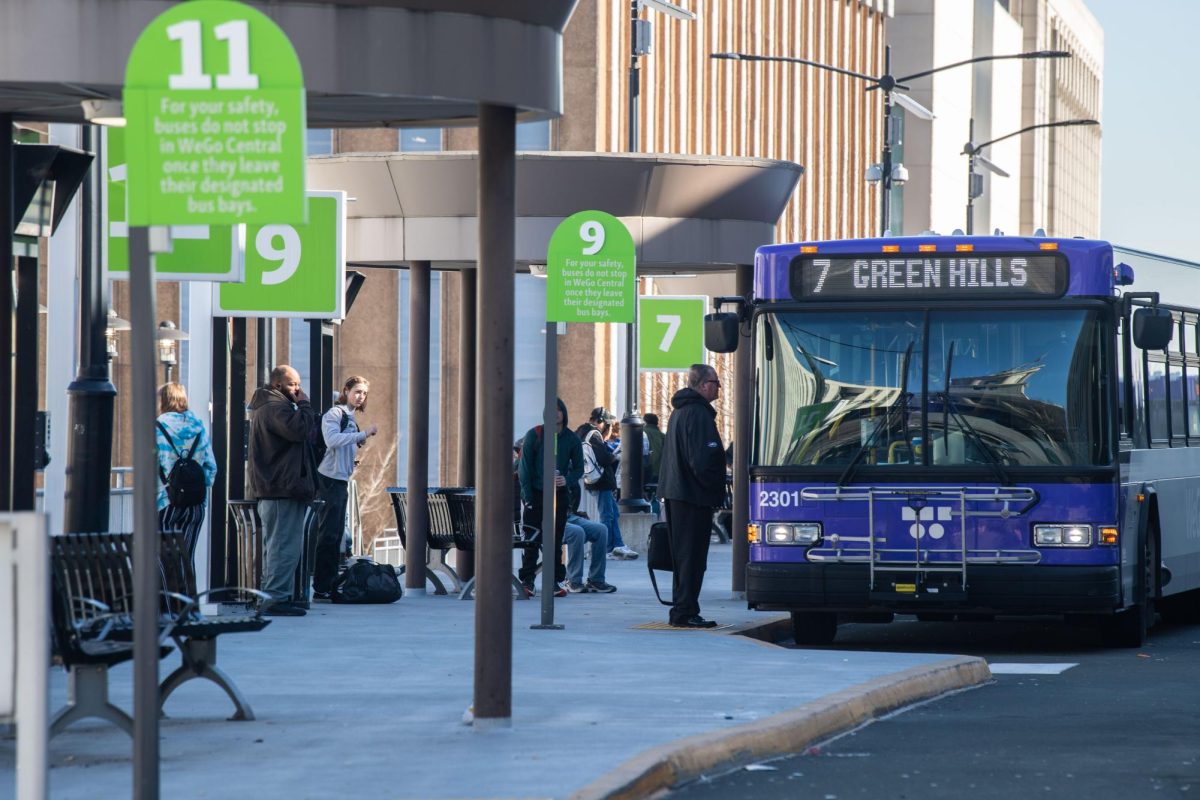
Over nearly two decades, KIPP Nashville has grown into a network serving over 4,500 students across neighborhoods like Antioch and East Nashville, often following where the need is greatest. Dowell remembers a student named Kair from Antioch who used to spend nearly two hours commuting to East Nashville just to attend KIPP. “She and her classmates would take the city bus to get here. One day over lunch, I asked if we should make KIPP in Antioch. She didn’t hesitate, saying, ‘yes, so we don’t have to take a two-hour bus just to get an education like this.’”
The type of education that Kair mentioned is built around a strict KIPP model that combines extended learning time and college preparation. Unlike traditional schools, KIPP students attend longer school days, typically from 7:30 a.m. to 4:30 p.m., and even some Saturday classes. Teachers try to incorporate excellence in the arts, academics, and growth in their classroom environment by encouraging students to go outside of their comfort zone and do more. Over 96% of KIPP Nashville graduates attend college or training programs, compared to the state’s average of about 59%.
The idea, Dowell says, is to give students access to college-prep opportunities that can change their future trajectories — ones that students can’t get at traditional schools. In fact, one KIPP student recalled a time when she moved to a public school, located closer to her home, and was disappointed. “After I was done with my work, the teacher told me I could just put my head down and sleep,” she said. It was not what she expected. She was hoping she would be encouraged to do more, whether that be extra problems or giving help to a classmate. That’s the kind of education that she, and many of her peers at KIPP, are seeking.
Halima Labi, principal of KIPP East Nashville, serves an underrepresented community — historically Black and gentrified, with Hispanic families moving in from surrounding neighborhoods. The school’s demographics are roughly 59% Black, 40% Hispanic, and 1% white. “It’s an interesting mix of African American families who’ve lived here for decades and younger white couples moving in,” said Labi. “A lot of families have been priced out of this area.” As a Vanderbilt graduate who’s spent her entire career in charter education, she recognizes that students who attend KIPP might not have the same privileges as others. “They have to grow up and show up in ways other kids don’t,” she said. “You have to love those kids and be committed to their success. You have to go the extra mile because they need it.” That’s what the KIPP model strives to do — go the extra mile.
She’s proud of the strict dress code and zero tolerance for drugs and violence that KIPP establishes. But she also recognizes those same rules fuel outside criticism. “People think it’s like a military school or prison,” she said, unconvinced by that narrative. The uniforms aren’t about control or order, but rather “about professionalism, preparing [students] for what they have to do when they leave.” Labi characterizes the culture as intentional and rich rather than rigid. Outside the dress code, students can be, as she put it, “their authentic selves.” She said it makes KIPP a place where “nerdy Black kids can play Dungeons and Dragons without getting bullied.”
Still, those high standards can be overbearing for many students. For some, its strict philosophy can be empowering, yet for others, it puts too much pressure on students. “Sometimes it’s like standing in front of a mountain I can’t climb,” admitted a KIPP high school junior. She sighed, “You don’t want to let your teachers down, but you’re also so tired.”
Dowel acknowledged these growing pains. “We coach kids up and talk to them like their parents would want us to,” he says. “We tell you: we see you, this matters, and we care about you. Almost every kid comes around to that.” Although burnout is common in every school, KIPP’s focus on college readiness tries to combat some of the stress that comes with it. Students begin taking ACT prep courses their freshman year and meet regularly with college counselors.
Outside the school, it has become apparent that the relationship between Metro Nashville Public schools (MNPS) and charter schools like KIPP remain complicated. MNPS board members often describe it as friendly competition. As one MNPS representative put it, ‘yes, it’s competition, but competition isn’t always a bad thing.’ It pushes everyone to do better.
Still, funding remains controversial. Charter schools, while publicly funded, draw money from the same place as traditional public schools, leading people to believe that they divert resources away from public schools. Dowell disagrees. “Every student receives tuition funding from the state and city combined,” he explained. “If a child goes to a public school, that school receives the tuition. If the child attends a charter then moves to a traditional school, the tuition is split accordingly.” In fact, the tuition follows each student. There is no basis for arguing otherwise, Dowell said, because that is how the system is set up according to Tennessee state law. “Ultimately, it’s about student choice.”
Charter schools were originally designed as educational experiments, meant to test new models that public schools could learn from. But it’s clear that charters like KIPP have moved beyond experimental models and into more permanent schools. In Nashville, the MNPS board frequently declines new charter applications, citing budget constraints or concerns about the population. If applications are denied by the board, schools can still appeal to the state, which causes tension.
This tension extends to extracurriculars like sports. For decades, charter schools in Nashville have relied on shared sports leagues. But in 2022, MNPS announced that charter schools could no longer compete in the middle school leagues, cutting many sports-related opportunities for students. More recently, a long staging co-op between Valor Collegiate Academies (a local charter) and Overton High School was abruptly canceled. While co-ops have yet to be cut at KIPP, Dowell guesses that it’s because they co-op with smaller schools. Labi raised concerns about the potential impacts on the growing tension between MNPS and charter schools.
Despite the challenges, KIPP leaders frame their mission as long-term. Dowell reflected on what failure would look like: “Failure only happens when you stop learning. As long as we’re still getting up when we fall, still listening, still growing, then setbacks are just opportunities to get better.” Labi defined failure in human terms: “If our kids graduate and can’t exist confidently in the world.”
It is clear that KIPP Nashville values the education and growth of its students. The school illustrates the complexities of providing opportunities to a wide range of communities, finding an acceptable balance of academic rigor and culture. The results from KIPP Nashville are not the same for every family, and there remain challenges, yet at the end of the day, it provides a college focused environment for many students.
So now that you’ve heard the story, what do you think? Are charter schools the answer to an inequitable system, or are they just another way of rearranging it?