



























The email arrives, and the room grows tense as the pressure increases. A high school senior sits alone at their desk, fingers hovering above the trackpad, afraid to open it as messages from friends flood in, asking, “Did you get in?” The student finally clicks on “Status Update,” only to be met with the dire words, “We regret to inform you…” Heartbroken, the student doubts the quality of their essays, the rigor of their classes, and even their intelligence. They decide this email determines their value—and it does. It tells them they weren’t good enough.
Each year, tens of thousands of students experience this gut-wrenching feeling, often without ever understanding how the decision was made or who made it. There is much light that can be shed on the college admissions process. To address some questions and concerns we interviewed Douglas L. Christiansen, vice provost for university enrollment affairs and dean of admissions and financial aid.
Here’s what you need to know about what does and doesn’t go into the review process for acceptance at one of the country’s most competitive schools, which is right here in Tennessee: Vanderbilt University.
Grades
Christiansen first explains the process admissions officers go through to look at each applicant: “We first look at the academics of the student, and that’s going to be the grades, the courses they’ve taken, the rigor of those courses.” They look at the trend of the transcript to see if the student’s grades improved over time, stayed consistent, or declined as they progressed to senior year.
Essays
As a student, the essays you write give admissions officers context about who you are, the circumstances you grew up in, and, frankly, your personality traits. This makes it important to ensure your personality shines through with personal touches and by making sure edits from others don’t overshadow your voice. Writing essays is always one of the most common concerns in college admissions.
Students writing Vanderbilt’s signature “Dare to Grow” essay may want to focus on the unique viewpoint they bring and how that perspective was shaped. Guiding questions could include: How has your culture influenced who you are? What challenges have you faced because of your socioeconomic standing, and what did you learn? What is your Myers-Briggs personality type, and how well do you think it represents you? What movies do you enjoy and why?
Ultimately, because Vanderbilt is looking for a wide range of students rather than a single type, being authentic is key to answering these questions.
Testing
Unlike other top institutions that have brought back their testing requirements, Vanderbilt remains test-optional, though admissions officers still consider test scores. As a result, around 60% of students choose to submit their scores.
As a former member of the College Board’s board of trustees, Christiansen understands the importance of test scores but explains that the admissions office’s research found students who applied test-optional had similar GPAs to those who submitted scores. This is likely a key reason Vanderbilt continues to remain test-optional, but Christiansen mentioned that they will continue to look over data and decide if they will continue their test-optional status in the next application cycle.
Extracurriculars
These are “what’s really key for the admissions process.” Christiansen explained that they look for students who have been involved in clubs or activities over an extended period of time and the impact they’ve made in those roles. By impact, Christiansen means it’s not just about participating in an activity, like helping build a house, but about taking initiative and creating something that engages others, as he put it: “creating a program that got 100 students to go out and help build.”
Another example could be a student in their school journalism club who expanded on that interest and started writing or editing at the national level. In other words, Vanderbilt is looking for extracurriculars that a student has not just dedicated their time to, but has shown growth and meaningful contribution to.
Letters of recommendation
Then comes the letters of recommendation, which Christiansen said “help us understand who you are as an individual” because “once so many students already are at that high level, now it’s all the other things that make the difference where the admission decision comes.” Because so many students meet the academic criteria and have outstanding extracurriculars, the only other major factors are essays and letters of recommendation.
Personal context
A top student at one high school may rank very differently at another, depending on available resources and academic rigor. “There’s not a cutoff,” Christiansen said. “If you asked me what’s the minimum GPA, the minimum test score, or the minimum number of clubs, I’d say there isn’t one. It’s the context of where you came from.”
This puts further emphasis on other factors, including growth within your extracurricular. Though there isn’t a quota, there is an undisclosed ranking system, which some students criticize both the use of and the lack of transparency around. This system has not changed in the last decade despite the admissions becoming more competitive.
Admissions reader bias
Students wonder whether their fate depends on which admissions officer happens to read their file and whether bias can ruin their chances. Many students make TikTok jokes about the potential bias within the admissions process, with one declaring in a video that an admissions officer would “reject them simply because the officer didn’t like the applicant’s name.” Though this was merely a joke, students in the comments expressed worries that this might truly be the case.
Christiansen addressed this anxiety by explaining that Vanderbilt is deeply focused on inter-rater reliability, explaining that “it should not matter who reads your file. The outcome should be the same.” To achieve this, the admissions office conducts “enormous amounts of training,” not just at the start of the cycle but continuously throughout Early Decision and Regular Decision rounds.
Christiansen explained that the admissions team actively monitors scoring patterns and that “if there’s an admissions officer that seems to score lower or higher than the norm, we try to understand and do a lot of retraining.” Most importantly, Christiansen stressed that applications are never evaluated by just one person, noting that “more than one person reads it anyway, that’s how we know if there’s a difference.”
In-state advantage
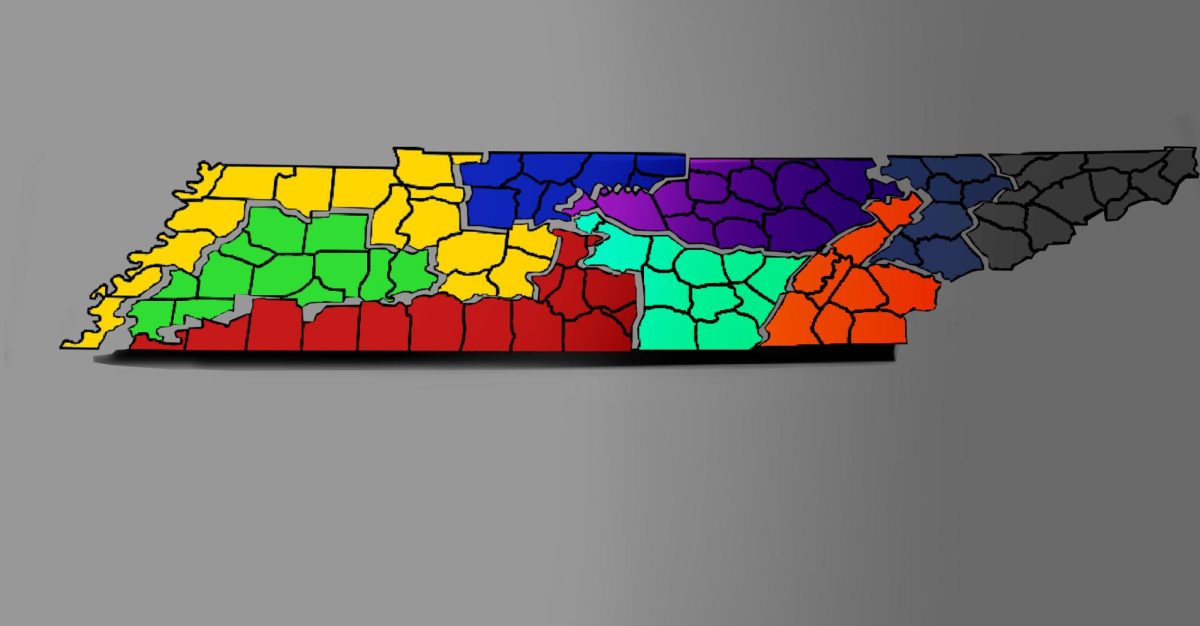
Additionally, many students wonder whether Tennessee students have an edge in the admissions process, and Christiansen explained that because Vanderbilt is not a public university, they are not expected to prioritize in-state students because they are “not bound by a percentage or anything.”
While some states place restrictions on out-of-state enrollment at public universities, Vanderbilt is able to attract students from all over the country, as evidenced by the fact that, according to Christiansen, approximately 23% of its incoming class is from Tennessee, with the remaining 77% coming from other states and nations.
Although 23% is the highest percentage from any one state, Christiansen stressed that this is not a quota but rather the result of more Tennessee students being aware of Vanderbilt.
Feeder schools
Christiansen pushed back on the idea of “feeder schools.” He pointed out that in the most recent entering class of approximately 1,630 students, Vanderbilt enrolled students from over 1,200 different high schools. This means that the vast majority of students were the only person admitted from their school, while only 430 or so students came from schools that sent more than one student.
Nonetheless, there is no cap on how many people can be chosen from one school. He explained that “If there were a high school and there were 15 students that met everything we wanted, we would take that.”
Deferral
When it comes to being deferred, many students are left wondering what the next steps are. For these students, Christiansen said it is crucial to ensure that their high school submits their seventh-semester transcript, because early applications do not include fall grades. Beyond transcripts, he explained that a letter of continued interest can be helpful, but stressed that the letter should hold substance: “Don’t write your admissions officer with questions you could find online yourself…you should really just do a statement that says, ‘I’m writing to let you know I’m very interested, and here is why.’”
He also noted that if there are significant updates to achievements, like winning a national debate tournament, these can be included to strengthen the letter, but minor updates, such as joining two more clubs, are not going to make a difference. It’s important to remember that the admissions team is extremely busy reading applications and won’t appreciate repetition of superficial interest.
Hopelessness, fear, sadness, and even excitement are feelings experienced by seniors across the world. While many are eager to go to college, others face serious mental health challenges as they move through the admissions process.
Christiansen recognizes the toll that admissions decisions and the process itself can have on students. He wants them to know that “the most important thing an applicant can do going through this whole process is to check their mental health.” And if you get rejected, it is not because you are “good or bad.” In fact, 93% of the students who are denied entry to Vanderbilt could succeed there academically. Thus, it is crucial not to let a single decision determine your worth.
So to all the students who are feeling like they weren’t good enough or are stressed about what the future holds, just know that one email does not define who you are. Whether you were accepted or rejected, you took all the classes you could, put your all into clubs, sports, and home responsibilities.
Ultimately, success should not be defined by getting into a school like Vanderbilt, but by the hard work you’ve shown, the friends you’ve made, the essays you’ve written, the math problems you’ve solved, and the memories you’ve made throughout your high school years.