

















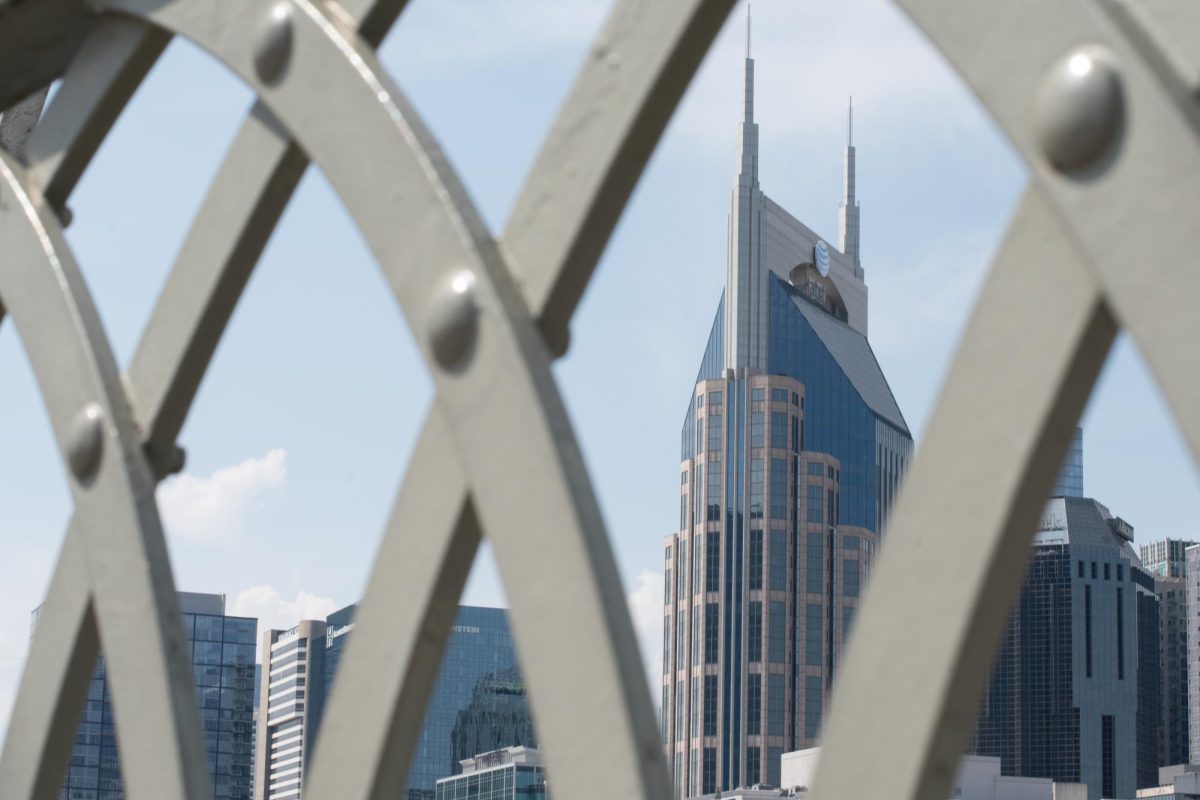
When I attended Nashville’s Country Music Association (CMA) Fest one steamy night this summer, the most memorable part of the event was not the music at all – instead, it was a vile stench. Later, I would come to discover that the smell was a costly consequence of outdated stormwater infrastructure. At the base of the pedestrian bridge, a sewage smell hung in the air, emanating from the city’s storm drains. For a city that heavily relies on tourism, this issue poses serious problems. Nobody on vacation wants to plug their nose as they fight off a chemical-warfare-grade stink. According to the American Society of Civil Engineers (ASCE), the United States is facing an “old age crisis” in terms of infrastructure, and Nashville is no exception to this trend.
Ironically, the savior of our outdated infrastructure is precisely what we as Nashvillians complain about most: population growth
In the last 12 years, the population of Nashville has grown by 101,000 – a 16% increase that smashes the national average of 6%. The influx of new residents drives the need for new building projects, whether this be schools, healthcare facilities, or residential developments. These projects are proposed by an owner – either a private developer or the Metro government – and then executed by a general contractor (GC), who oversees the actual construction process. In the last decade, 88 major-build projects have broken ground in Nashville – that’s 24 hotels, 34 residential buildings, 16 office buildings, and two stadiums. Though the rate of new projects is slowing, Turner Construction and fellow GCs have no shortage of work, often juggling multiple major builds at once.
In many cases, Metro and Nashville Electric Service (NES) will coordinate with the GC and use new construction projects as a golden opportunity to update antiquated infrastructure. I witnessed this symbiotic relationship firsthand this summer when I shadowed Turner superintendents at the up-and-coming Roberts Academy and Dyslexia Center. Located along Edgehill Avenue between 18th and 17th Ave, the academy is a new initiative sponsored by Vanderbilt’s Peabody College to improve research on dyslexia and outreach.
As part of the build, Metro ordered) that Turner update the sewer and storm water drainage underneath the build site.
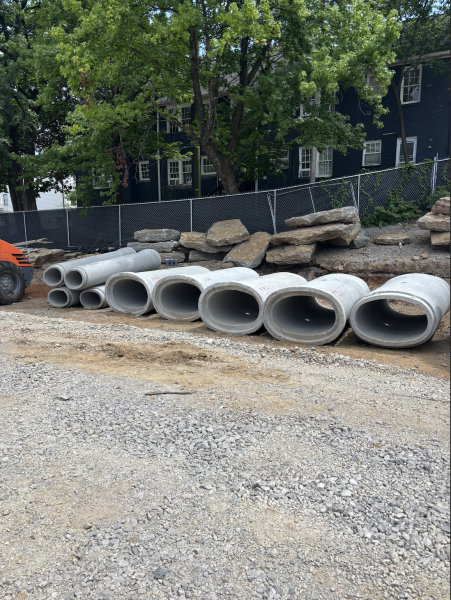
In the photo, the smaller concrete tubing on the left is the current piping in our storm and sewer system, whereas the larger tubing is the new piping to be installed once the project proceeds further. The diameter of the new piping is several times larger than that of the existing infrastructure. Its higher capacity will accommodate more population density and minimize ruptures. According to the city’s Overflow Abatement Program, initiatives like the GC-Metro collaboration have eliminated 2.7 billion gallons of overflow volume annually.
Beyond simply increasing capacity, Metro is also using new builds to correct an early design flaw involving our wastewater system – the same flaw that ruined my night at CMA fest. At the city’s inception, Nashville’s city planners combined waste and stormwater into a single pipeline. Consequently, a rancid stench emanates from the sewers whenever rainfall hits because the overflow of stormwater disturbs the wastewater as well. The smell, most prominent in Nashville’s oldest districts, drives away tourists and disturbs permanent residents. To correct this, Turner is separating the waste and stormwater into two different pipelines. Though just one example, Turner is taking steps to move towards a better-smelling Nashville.
Admittedly, there are also downsides to Nashville’s growth. The influx of new building projects does corrupt Nashville’s heritage and flair. Historic buildings are leveled in favor of sterile apartment high-rises. On Music Row, one of Nashville’s most culturally rich sectors, independent recording studios that have served Nashville for decades are slowly being replaced. Historic preservation should always be prioritized over new sewage systems or brighter sidewalks. Secondly, coordination between Metro, GCs, and NES can also stall the build process, leaving more active job sites scattered across the city than would be the case if GCs worked independently. And speaking from experience, active sites are not the most aesthetically or audibly pleasing.
A growing city also means expensive housing. The median housing price has more than doubled from $210,000 in 2015 to $436,951 in 2025. Prohibitively-priced housing spawns a whole breed of other issues, including gentrification and delayed homeownership.
That being said, the next time you pass yet another apartment high-rise under construction, in between your gripes about Nashville’s traffic and overpopulation, remember that new faces and new builds are a crucial part of keeping our infrastructure and living standards up to par.