










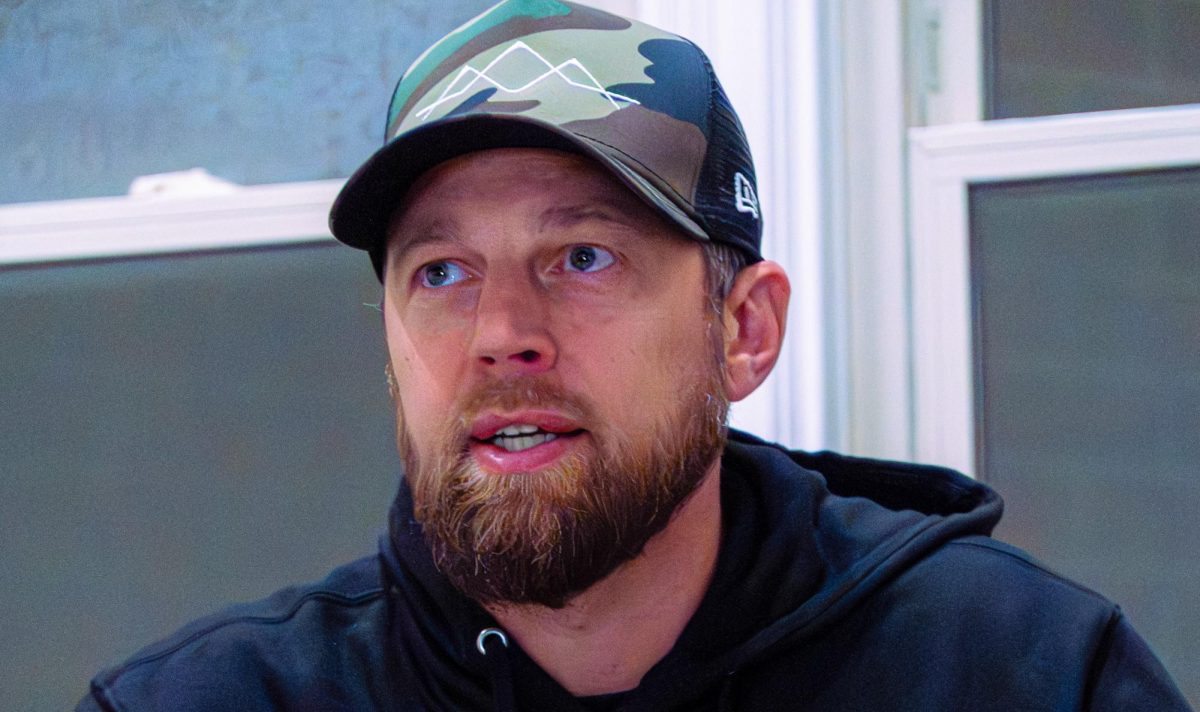




Mayor Freddie O’Connell has the tricky job of trying to meet the needs of all Nashvillians, regardless of their age or political party. In office since 2023 and now halfway through his four-year term, O’Connell grew up in Nashville, graduated from Montgomery Bell Academy, and earned two bachelor’s degrees from Brown University.
In his time as mayor so far, he has established the first-in-the-city Mayor’s Youth Council, spearheaded the $3.1 billion Choose How You Move transit plan, expanded affordable housing funding and development, and invested in local public schools. We caught up with him to ask about some of the major issues affecting young Nashvillians today.
Q: What were some particularly memorable, challenging, or meaningful experiences from your first term?
Mayor O’Connell:
I think we’ve not only seen some really difficult global conflict, we’ve also had really turbulent domestic politics that resulted in the huge and dramatic shift in policy and relationships with cities, between the Biden-Harris administration and the Trump-Vance administration. And we have to contend with that in multiple ways: The sudden, unexpected and forceful arrival of ICE in Nashville this spring, but more recently, the federal government shutdown that had a literal and profound and severe impact on local SNAP recipients. We had to be prepared as a local government to respond in both of those instances, and that’s been an incredible challenge.
I think a really meaningful thing, though, was on Election Day last year, the extraordinary success and voter acceptance and support. For the first time, we have dedicated funding for transit and infrastructure. Being able to know that we can — regardless of what happens elsewhere in the state or country or world — invest in things like sidewalks and transit service and safer infrastructure.
Q: What issues do you plan to tackle in the upcoming year that you would say are most relevant to young people?
Mayor O’Connell:
One of the biggest issues we’re going to tackle is housing affordability. We had a Unified Housing Strategy [Nashville government’s plan to alleviate the housing crisis] released earlier this year, so we’ve kind of started year one of that. I think year two, we’re going to really start to see more elements of that come to life in public policy, and we’re going to need to continue to have strong public engagement and community awareness around it.
When I was thinking about coming back to Nashville after college, it was very affordable for me to do so. I think as today’s young people that are thinking about life in Nashville after high school, or college, or any next steps, the opportunity to return home is not as easy as it was.
We want more people to choose different housing options in parts of the city that they want to be in with relative ease. That’s going to be one of the biggest things we tackle.
Q: How were young people’s voices taken into account in the planning process of the Choose How You Move plan?
Mayor O’Connell:
We’ve tried to always have somebody in the advisory committee process. We had Technical and Community Advisory Committee processes trying to guide that from a demographic and geographic diversity standpoint, and now that’s coalesced into an advisory committee on transportation, where the youngest member is a Vanderbilt student.
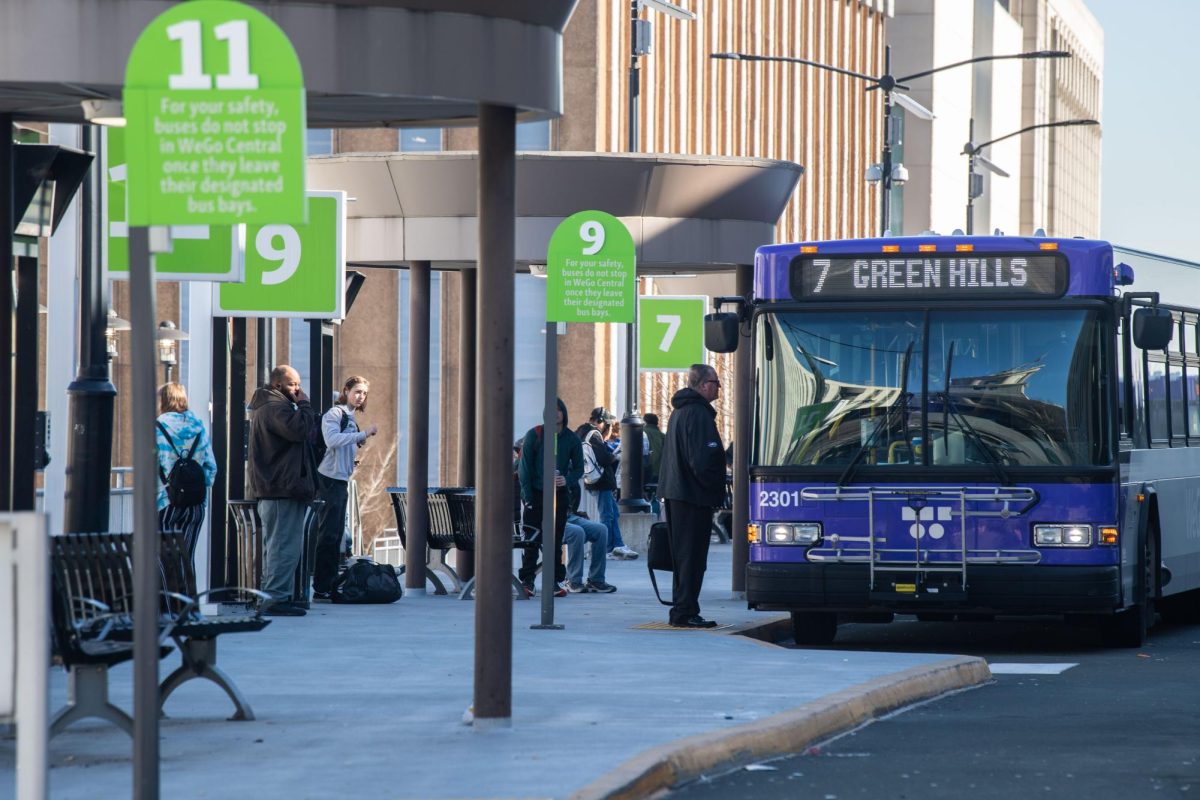
I knew this from my time, not just on the MTA Board of Directors, but then also Metro Council. In addition to the Mayor’s Youth Council, there has long been the WeGo Action Team. They’ve constantly been working with not just awareness among young people, but making sure that they are an advocacy community as well.
Q: What would you say to young people who are concerned about immigration enforcement’s presence in their communities?
Mayor O’Connell:
I would say, first, I understand the concerns. And two, it is critically important to know your rights, and so we have worked with Metro legal and with Dr. Battle [the district’s superintendent] in Metro public schools. I think there’s a lot of work that we have done to make sure people know where ICE can be, and where they are not permitted to be: traveling on roadways, traveling on transit, being in public spaces, whether it’s parks and libraries or schools.
I think overall, that it is continually important to advocate. We’re talking about a state that was just two votes away from being able to offer in-state tuition to undocumented immigrants, and that was not even that many years ago. I think people really do understand, especially for our younger immigrants, that they may not have had a meaningful say in their journey of arriving in Nashville or anywhere in Tennessee.
It’s really, really important for people who are able to either be allies or to have that courage to continue to share stories of how they are pursuing the most of the opportunities that are available to them here in Nashville, as Nashvillians and Tennesseans.
Q: I know you released the new capital spending plan [where the government gives funds to long-term city projects]. What specific parts of that plan do you think will most benefit youth?
Mayor O’Connell:
I hope within it we will see some infrastructure improvements. There are a lot of additional sidewalks and bikeways not in a state of good repair, bridges and so forth—things that we need to access the community. An example of some of that work that got done in time for this academic year was safety improvements at multiple schools: visible crosswalks, sidewalks where they may not have existed, and connection points.
The Capital Spending Plan had a lot of that in it, along with planning for a few new schools. We’ve got a new Antioch Elementary in the design phase, and a new McGavock High School. We want to build four new elementary schools, and James Lawson High School will replace the old Hillwood High School. Making sure that young people see that we are making specific capital investments in their futures is a big deal.
Q: You mentioned Judge Calloway and some of her work. How does your administration reckon with juvenile crime?
Mayor O’Connell:
One of the things that has been really important was a conversation that originated with young people speaking up at a public hearing in Metro Council a couple years ago. [Then] both the Metro Council and the budget and finance process, chaired at the time by Delisha Porterfield, worked with our office to establish an Office of Youth Safety.
That office, now led by Phyllis Hildreth, is looking at scenarios where there is not engagement with law enforcement or the criminal legal process, but instead a network of safe spaces that are not school and not home, so that we know that there are these third places where young people can feel confident gathering safely.
Q: What do you hope that the most significant outcomes of the Youth Safety Office will be?
Mayor O’Connell:
I hope that Phyllis is successful in building a bigger network of these places for young people and also raising awareness. For instance, the National After Zone Alliance has a really wonderful resource locator for parents and caregivers and supporters of young people to identify places, particularly starting in middle school, but even through high school for young people to gather.
But my hope is we can bolster that, find fewer young people in Nashville impacted by violence, particularly gun violence. And, in some scenarios, trying to make sure that initiatives like the POWER Youth Initiative at Metro Action Commission, in conjunction with our Office of Youth Safety, are also putting more opportunities on the table for young people. Hopefully not just do young people realize they can get a good summer job that pays, but actually can open up a lifetime of opportunity for themselves.
—
Mayor O’Connell has two years remaining of his first term, and major initiatives like the Youth Safety Office to launch. As of April 2025, his approval was at 67%, according to WPLN News. He’s already brought major change to Nashville transit, and is working on implementing his newest projects. It remains to be seen how these efforts will affect young Nashvillians, but one thing remains clear: they will be more effective if young people participate in those processes.
Hearing from your elected officials is a vital part of the political process. Do you want to learn more about one of Mayor O’Connell’s answers from this interview, or have a question of your own to ask? You can use HubNashville forms to make official requests, email him at [email protected], call his office at 615-862-6000, or reach out to the SUNN and request that we complete a follow-up interview. Are there any other public servants you would like to hear from? Let us know!